
Recently we’ve heard a lot about an increase of the energy price cap, with reports that it could be by as much as 50%. But although this can be a worrying time for us all, it does seem to be an interesting time for green energy options, particularly in energy storage.
In recent years, companies and countries all over the world have been focusing more and more on green energy and how to store energy for longer periods of time, with interesting solutions being developed.
During 2020, Uk’s National Grid system operator was forced to ask “renewable energy developers to switch off their wind turbines or solar farms to avoid overloading the grid with green electricity when power supplies outstrip demand” – Ambrose, The Guardian. When not used renewable energy needs to be stored; however, unfortunately, current methods can’t store power long term, or don’t allow for huge amounts of energy to be stored, with some batteries only having the capacity to store four hours worth of power.
Another issue with renewable energies such as solar or wind is that these sources can be quite inconsistent, with the intermittency potentially leaving us with low supplies.
So, whilst many are looking into different eco-friendly sources for energy, many companies have been looking into methods to store energy to reduce the impact on the environment, but also provide a consistent level of supply through the highs and lows.
We’ve taken a look at some of the different ways people around the world are beginning to store energy from renewable sources.
Molten Salt
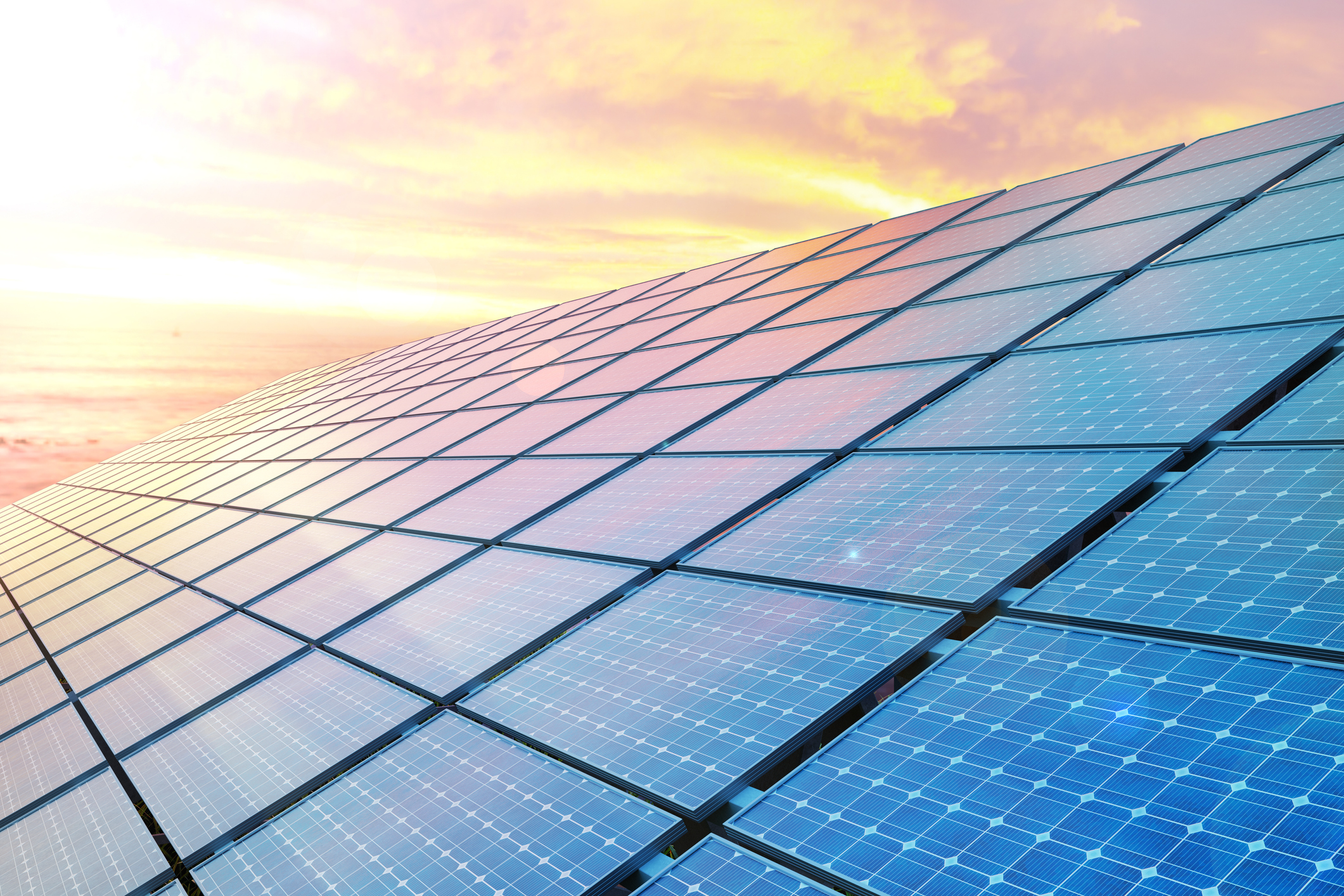
In the Nevada Desert, on top of a 640ft tower, is the Crescent Dunes Solar Energy Facility. Surrounded by mirrors that focus the suns rays, this facility is working to prove that solar energy could be used to provide affordable, consistent energy by storing what it makes using molten salt. Concentrated sunlight heats the molten salt to 565℃ which is then stored and used to make steam to run a turbine. The storage tank has the capacity to hold 1100 megawatt per hour of storage - almost 10 times more than the largest lithium-ion battery systems, or enough molten salt to run the generator for 10 hours.
Cryogenic batteries
Cryogenic storage works by using renewable energy to cool air down to -190℃, turning it into a liquid. When needed, this liquid is warmed back up, turning it back into a gas. The volume increases (about 700 times) and is driven through a turbine which creates electricity. A cryogenic energy storage plant is currently being made in the Uk and hopes to be completed in 2023. With 50mw of storage, it’s thought to be one of Europe’s largest energy storage systems. There have also been designs for cryogenic storage plants that can hold up to 200MW which, at 1200 megawatts per hour, is enough to keep a city going for 6 hours.
Pumped Storage Hydropower
Pumped storage hydropower works by using renewable energy, when it is being produced in excess, to pump water from one reservoir into another up a hill. When the renewable energy sources are producing less energy (for example, solar power production drops at night) the water flows back down the hill into the lower reservoir through turbines and creates hydropower. This is a commonly used system of energy storage in America and is becoming more popular with some having the capacity to store 3600MW.
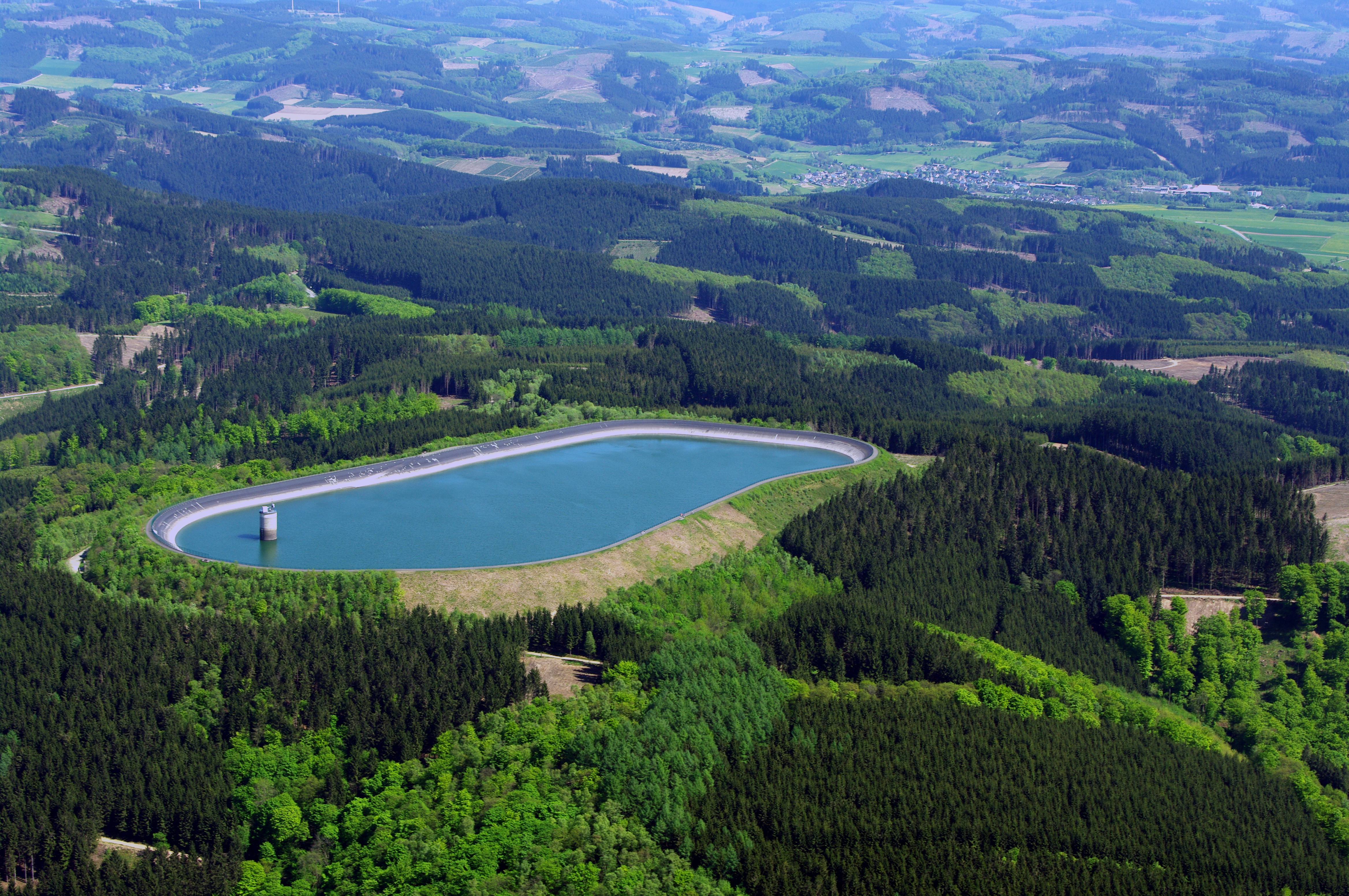
Credit: Dr.G.Schmitz, CC BY-SA 3.0
Green hydrogen
Hydrogen energy storage is a system where power is converted into hydrogen through the electrolysis of water. The hydrogen gas is then stored, often in underground caverns or steel containers and can then be used as fuel for combustion engines, gas turbines or used in hydrogen fuel cells. Green Hydrogen as a fuel source is set to replace fossil fuels in power plants as well as being used as a form of energy storage. Mitsubishi have proposed a facility able to store enough Green Hydrogen to generate 150000 MGW/H of electricity – this amount count supply 5million homes for one day. Hydrogen storage can store electricity for longer than most other storage methods too, often lasting months.
These storage methods are all being developed with the hopes that renewable energy won’t just be wasted when created in excess, but can be stored and used later when the renewable source isn’t producing electricity. It will allow for countries to use renewable sources for power, as the stores will enable a constant supply of power, instead of the current peaks and troughs of renewable energy provision.


